Recent work
Trailer coverage
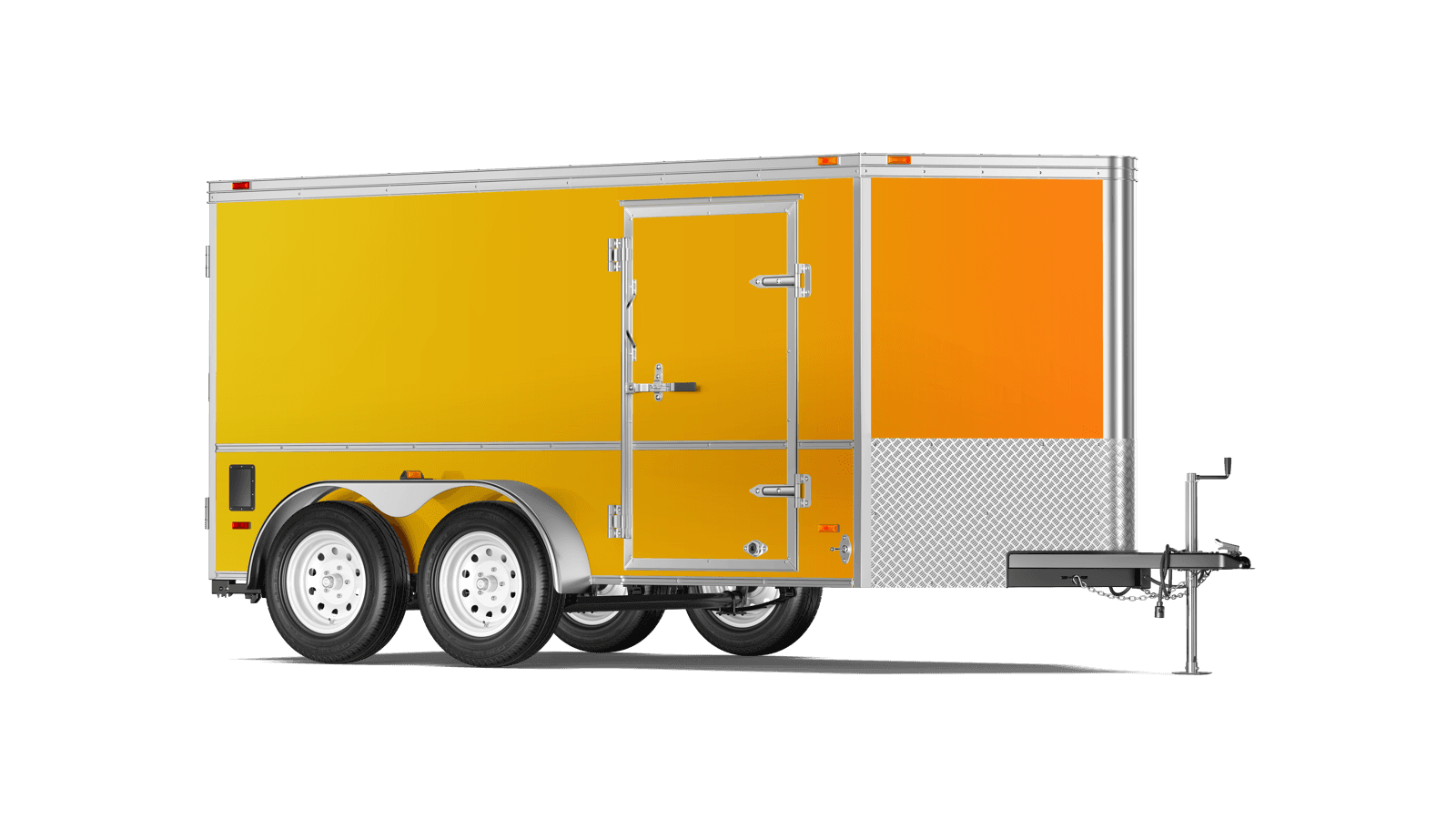
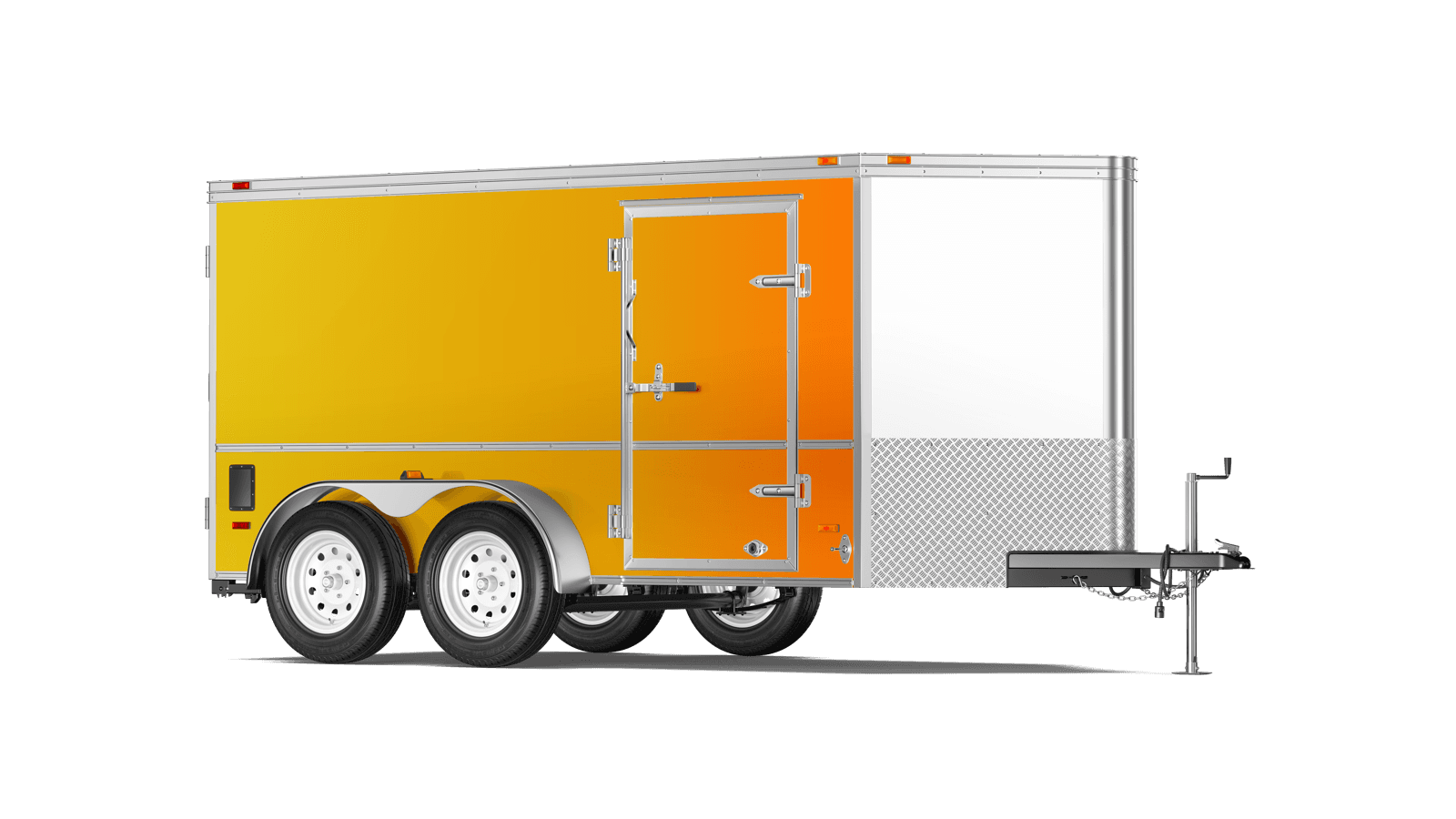
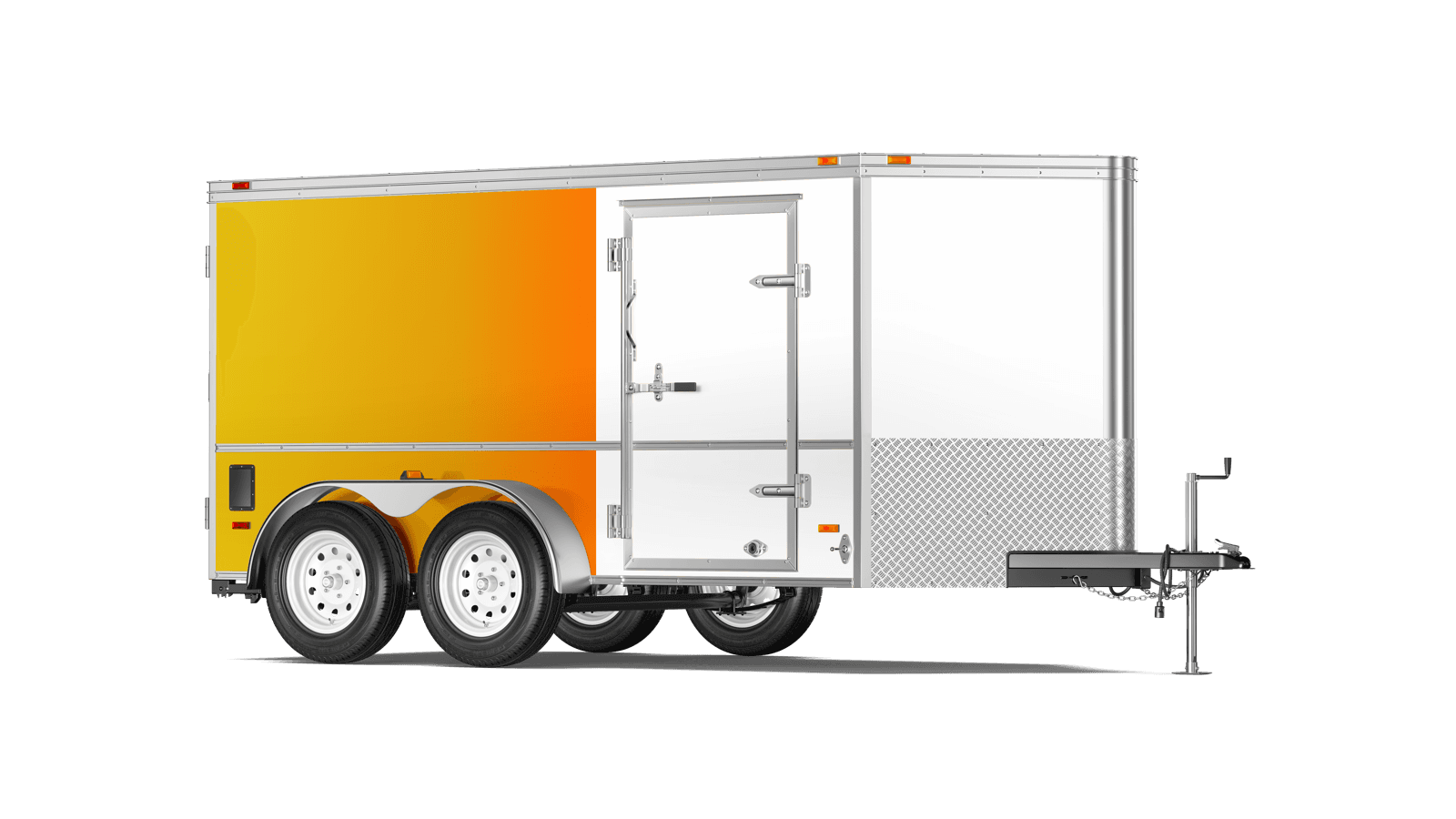
A trailer wrap is printed vinyl installed across the panels of an enclosed cargo trailer, food trailer, contractor trailer, race trailer, or marketing trailer — turning a flat-sided box on wheels into the most cost-effective rolling billboard you can park in front of a job site or run down I-15. Identity Graphx wraps trailers in Salt Lake City for service businesses, food operators, and event marketers. Cost scales with trailer size and graphic complexity.
Read the full trailer wraps guide
Trailers are the cheapest brand surface on the road
We've wrapped a lot of trailers. What we've learned across years of trailer work: a wrapped enclosed cargo trailer is often the highest-ROI piece of rolling marketing a service business owns.
The math is straightforward. A 24-foot enclosed trailer has roughly the same wrappable surface as a Mercedes Sprinter — but the trailer wrap costs 30–40% less per square foot. For a modest bump over a truck wrap, you nearly double the visible brand surface on the highway.
For service businesses that already tow a trailer to every job — contractors, landscapers, mobile detail shops, mobile services of every shape — the question isn't whether to wrap the trailer. It's why the trailer isn't already wrapped.
For food operators and event marketers, the trailer wrap is the business — the trailer is what the customer sees before they decide whether to walk up.
Trailer types we wrap
Enclosed cargo trailers
The bread-and-butter trailer wrap. Flat panel sides, predictable dimensions, easy install. We wrap a lot of these for:
- Service contractors — HVAC supply runs, electrical job trailers, plumbing equipment haulers
- Landscapers + lawn care — mower trailers branded with company logo, phone, services
- Mobile detail / mobile services — the trailer is the shop
- Tradesmen who tow tools — branded equipment trailers that double as job-site advertising
Most cargo trailers we wrap are in the 12-to-24-foot range. Single-axle or tandem-axle, V-nose or flat-front — they all wrap.
Food trailers / mobile kitchen units
The hardest-working wrap surface in the food business. A wrapped food trailer needs to: (1) signal what you sell from 50 feet away, (2) survive being parked outdoors year-round at events and lots, (3) hold up to wash-downs and food-prep environment cleaning, and (4) make people walk up.
We've wrapped food trailers for everything from coffee operators to BBQ to taco trucks to ice-cream operators. Different rules than service-trailer work — menu visibility, brand hierarchy, food photography placement all matter more than they do on a contractor's cargo trailer.
Contractor trailers / equipment trailers
Job-site marketing that runs while you're inside the customer's house. A contractor trailer parked at a residential job site does three things at once: holds tools, identifies the company to the neighbor watching from across the street, and pre-sells the next job before you're back in the truck.
We wrap a lot of these. Branded sides with company name, services, phone, license number. Sometimes a job-site QR code that pulls up the company's reviews.
Race trailers / motorsports trailers
The category where the trailer wrap is a sponsorship contract. Race trailers haul to the track, park in the paddock, and become the team's mobile shop window. Sponsor packages, driver photography, sponsor decals, custom paint-effect graphics. Different design language than commercial work — but the same materials and the same install process.
Marketing trailers / event trailers
The trailer-as-experience-asset. Pop-up retail, event activations, trade-show haulers, mobile sampling units. The wrap is part of the activation, not just an identifier — designed to attract foot traffic at events, festivals, sponsor lots.
Trailer wrap as cheaper than truck wrap
Service businesses that haven't done the math sometimes ask why our trailer pricing is competitive with our truck pricing. The answer is in the surface area.
A wrapped truck delivers a moving brand surface — but the brand surface itself is fragmented across multiple panels, doors, fenders, windows. Wrap surface area on a Ford Transit is around 600 square feet of usable vinyl.
A wrapped 20-foot enclosed trailer is one massive flat box. Wrap surface area: 700-plus square feet on the sides and back alone. More brand surface than the truck towing it, for a lower install cost — because flat panels install faster than the contoured doors, mirrors, fuel ports, and wheel arches of a vehicle.
The ROI math on trailers is the most favorable in the wrap business. A full Ford Transit gives you around 600 square feet of usable vinyl; a 20-foot enclosed trailer clears 700+ and a 24-foot trailer 900+ — more brand surface than the truck towing it, at a lower cost per square foot, because flat panels install faster than contoured doors, mirrors, and wheel arches.
For service businesses already towing trailers, the trailer is the most under-utilized brand asset in the fleet. We wrap a lot of trailers for this exact reason.
Pricing by trailer size
Trailer pricing is more linear than vehicle pricing — flat sides, predictable surface, less variance from one trailer to the next. Cost climbs with size and coverage, from small enclosed cargo trailers up through 24-footers, food trailers (more design complexity), and race trailers (largest surface and most graphics); lettering-only branding on an open utility trailer is the low-end entry point. See full starting prices by vehicle →
Materials — same cast vinyl, same warranty
Trailer wraps install on the same cast vinyl we install on every commercial wrap:
- Premium Avery Dennison cast vinyl and matched laminate — our primary film, backed by an up-to-6-year vinyl warranty.
- 3M cast vinyl when a job calls for it — for specific color, finish, or fleet-match needs.
What we don't install on trailers: calendered vinyl, even though some shops use it because trailers "don't move enough to matter." A trailer in Utah summer takes more UV exposure than a daily-driven truck because the trailer is more likely to live outdoors year-round on a lot — and calendered film fades, cracks, and lifts faster outdoors than on a vehicle that parks in a shop overnight.
Full materials breakdown: /wraps/materials.
Bring your design or let us build it
Trailer wraps run the same two design paths as vehicle work.
Bring your AI design
You made a mockup in ChatGPT, Midjourney, or Sora. It looks great on screen. The file will not print and the dimensions won't match your actual trailer's side panels. We fix what the AI got wrong, extract what it got right, install the wrap.
Full detail: AI design to install. Same pricing as our standard design package — no "AI surcharge."
Let us build the design
Basic ($250, 1 concept + 3 revisions), Standard ($500, 2 concepts + 6 revisions), or Premium ($750, 3 concepts + 9 revisions) — flat design packages, priced up front.
For food trailers especially, design is more than a logo placement — menu hierarchy, food photography, brand voice, and visibility from foot-traffic distance all matter. We design food trailers as a brand surface, not as a sign.
What a contractor trailer rebrand looks like
A common trailer job for us: a service contractor brings in a 20-foot enclosed cargo trailer that's been running for years with just a magnetic sign on the door. We wrap the trailer in their full brand system — matched to the truck that tows it — and rebuild the side panels with services, service area, phone, and a QR code to the company's review page. The trailer goes from hauling tools to doing brand work at every job site.
Frequently asked questions
Q. How much does a trailer wrap cost?
A. Cost tracks trailer size and graphic complexity. Most enclosed cargo and contractor trailers land in the middle of the range; lettering-only branding on a small utility trailer is the cheapest entry point, while food trailers (more design complexity) and large race trailers (most surface area) run higher. The full starting-price bands live at vehicle wrap cost.
Q. How long does a trailer wrap last?
A. 5 to 7 years with the cast vinyl and laminate we install. Trailers that live outdoors year-round in Utah sun trend toward the shorter end of the range; trailers stored in a garage or covered lot run longer. UV is the killer — direct summer sun for full days is harder on vinyl than a daily-driven truck that parks indoors at night.
Q. Can you wrap a trailer that already has a wrap or old graphics?
A. Yes. Removal of the existing wrap or decals is a separate scope, priced by trailer size and how the previous wrap was installed. We document the panel condition under the old wrap before applying new vinyl. If the substrate underneath isn't healthy enough to hold a new wrap, we'll tell you before any new wrap goes on.
Q. Do you wrap trailers with rivets or seams?
A. Yes. Riveted aluminum trailers are common — we install over rivets with a heat-set technique that wraps the vinyl around each rivet head so it stays adhered through temperature cycles. Seamed panels get an edge-tuck at every seam. Standard trailer-install practice, not an upcharge.
Q. Will the wrap survive a pressure wash?
A. Yes, at moderate PSI from at least 3 feet away. Avoid aiming the pressure washer directly at wrap edges — high PSI at close range can lift vinyl. For trailers that need regular wash-down (food trailers especially), a soap-and-soft-brush hand wash is gentler on the laminate and extends wrap life.
Q. What does the install involve?
A. Every enclosed trailer is wrapped in our bay — vinyl heat-set around every rivet head and edge-tucked at every seam. Larger trailers and complex graphics (race trailers, food trailers) take more bay time than a simple enclosed box. Most of the project is design, not install. We keep your project moving and keep you posted at every stage.
Q. Can the wrap match the truck that tows the trailer?
A. Yes — and we encourage it. Truck + trailer matched as a brand system reads as one continuous billboard from every angle on the freeway. We design and print both off the same master production file, color-locked to the same vinyl batch where stock allows.
Q. Do you wrap food trailers? What's different about them?
A. Yes — we wrap food trailers regularly. The differences vs cargo trailers: design hierarchy (menu, hours, brand, phone all visible at once), photography of the food itself, and resistance to food-prep cleaning. We use the same cast vinyl as every other commercial wrap, but the design treatment is closer to retail signage than vehicle branding.
See your trailer wrap
Two ways to get moving.
- Design it with our AI tool. Trailer type, size, coverage, brand direction — see it rendered. 60 seconds, no sales call.
- Call (801) 648-9727. Faster if your trailer is unusual (race trailer, custom-built food unit, multi-axle equipment trailer).
Industries we wrap
Local service
Get a fast quote
Tell us about the job — we'll text you a real number.
Same-day reply during business hours with a starting price and a couple of quick questions. No sales funnel, no obligation — and you don’t have to use the designer.
Prefer to talk? Call (801) 648-9727