Wrap service · Salt Lake City
Window Graphics
Storefront window decals, perforated graphics, and frosted privacy film.
Recent work
Storefronts & glass
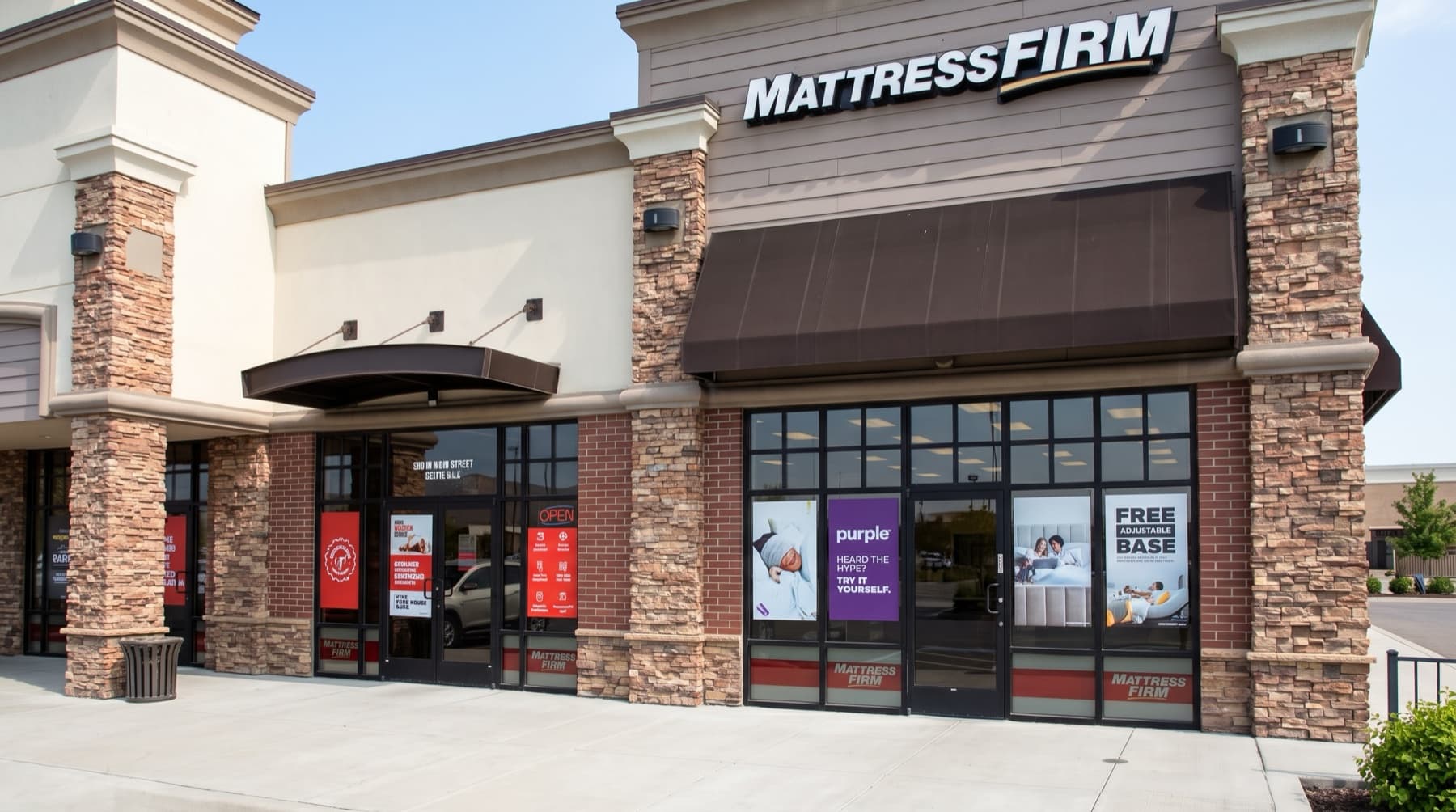
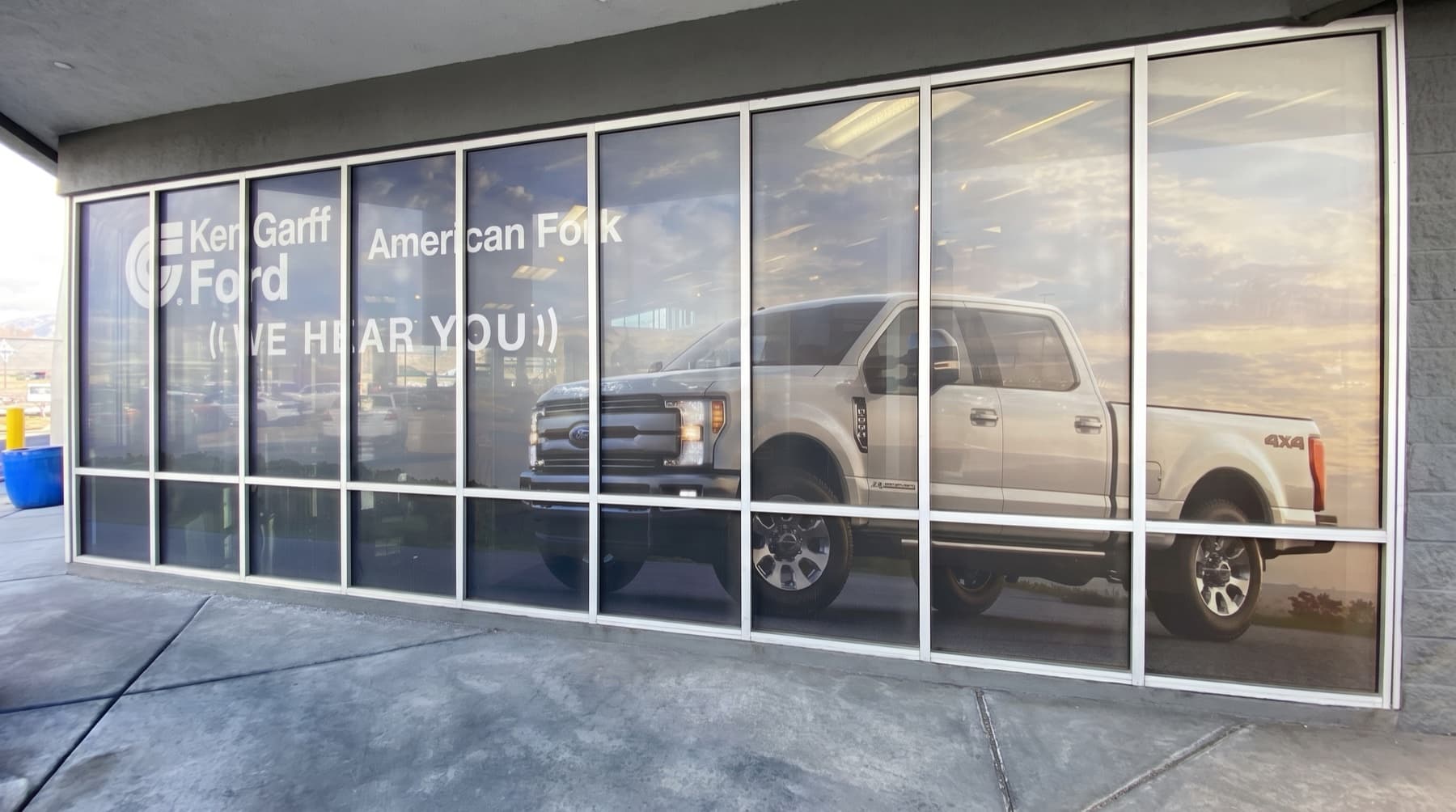
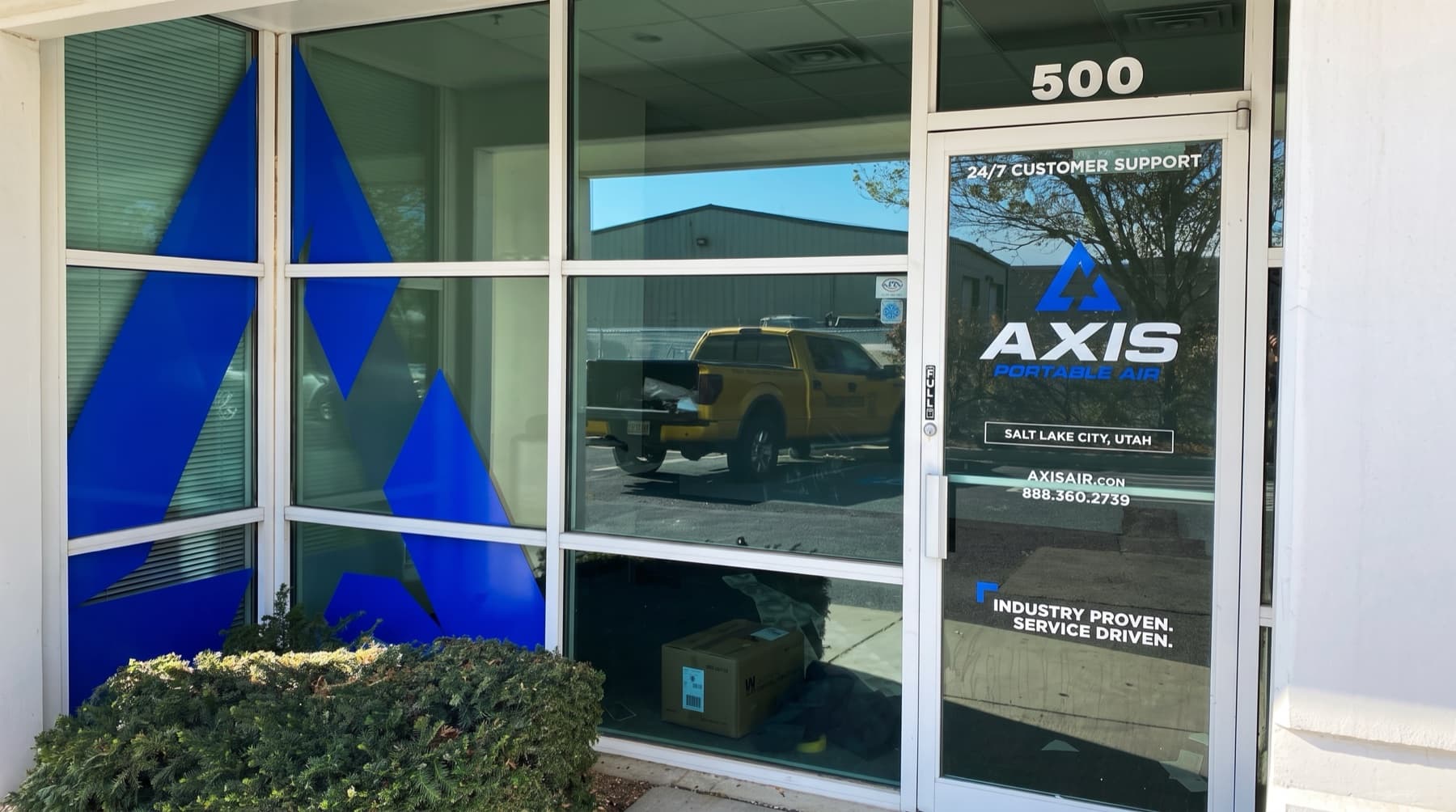
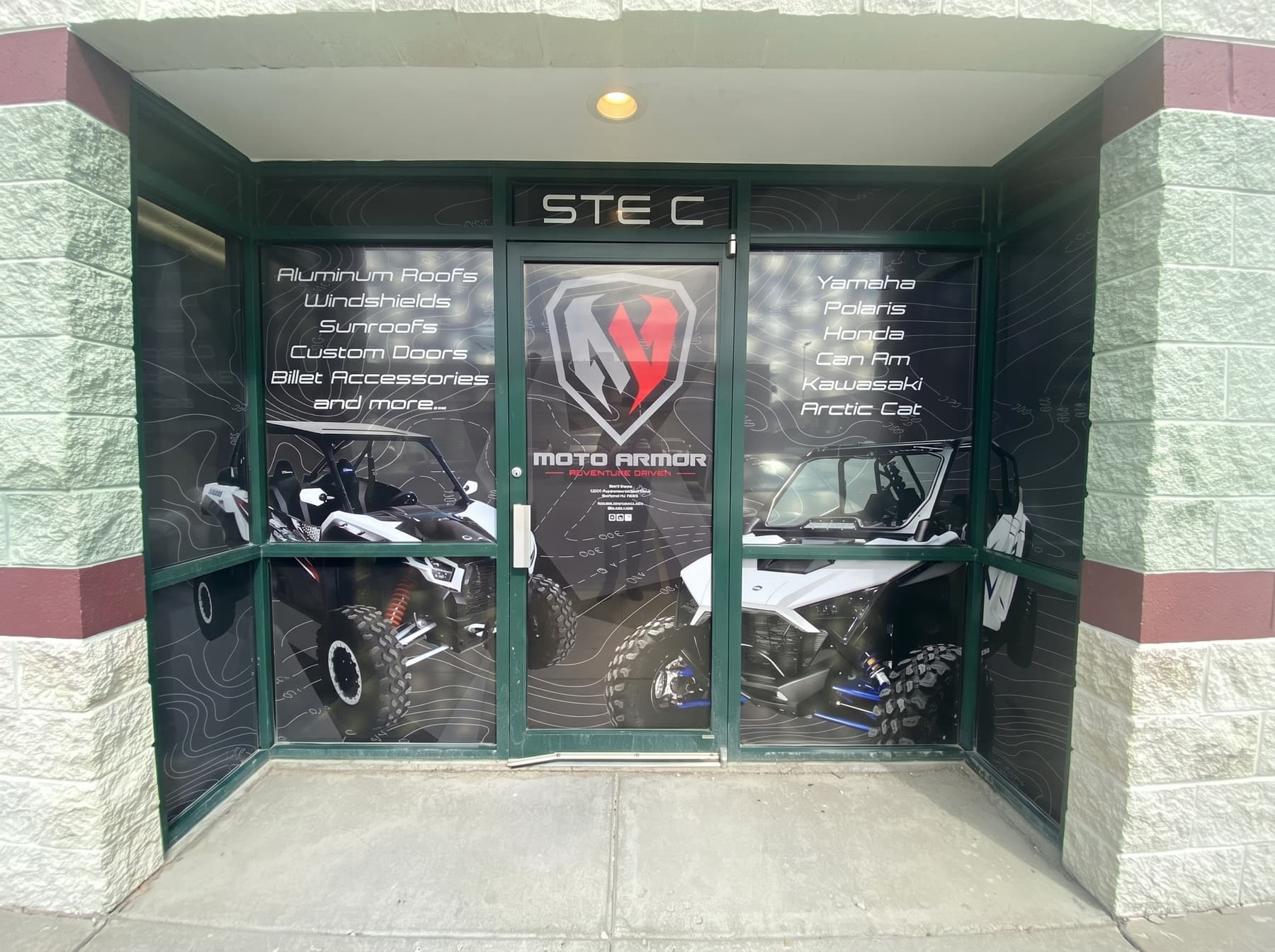
Read the full window graphics guide
What window graphics actually are (and what they aren't)
Window graphics are a marketing tool. Window tint is a heat-and-glare tool. They use entirely different films, install entirely differently, and solve entirely different problems.
Window graphics = printed or cut vinyl that puts your brand on the glass. Storefront logos. Sale signage. Conference room frost. The perforated band across the back of a service van that lets the driver still see out.
Window tint = a darkening film that reduces heat, UV, and glare. Installed by tint shops, regulated by state laws for vehicles, no brand application.
We do the first one. We don't do the second one. If you need tint, we'll point you to a tint shop we trust. If you need a frosted logo on glass that someone could see through if you wanted them to — that's us.
The five types of window graphics we install
These are the five forms window graphics actually take. Each solves a different problem.
1. Perforated window film (see-through from inside)
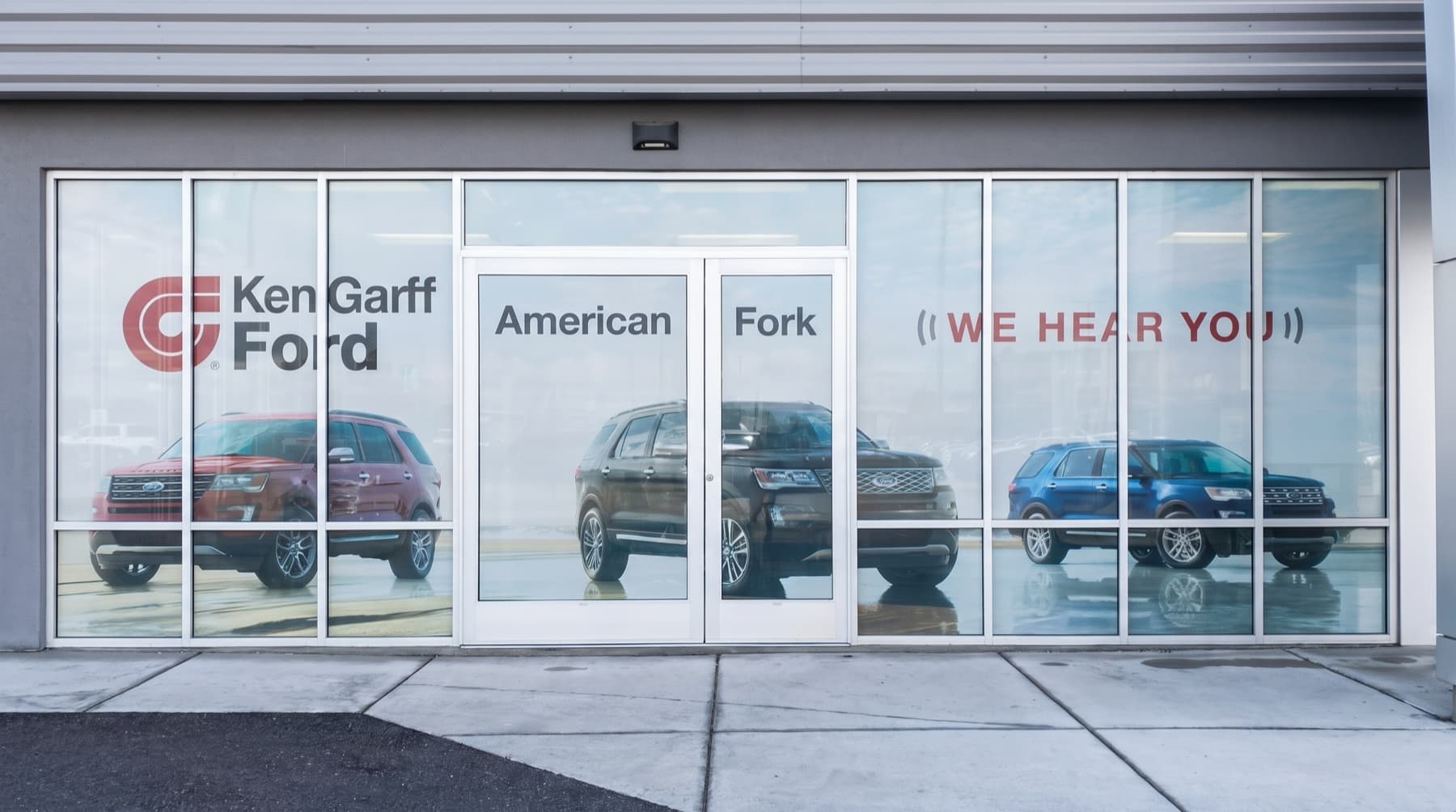
The vinyl is printed in tiny dots — about 50% perforated, 50% printed. From the outside, the design reads as solid. From the inside, you can see through it like a screen door. This is the film on the back of every service van you've ever seen with full-color branding across the rear glass — the driver still has rear visibility, the brand still reads from the parking lot.
Common applications: vehicle rear windows (the IGX add-on most fleet customers tack onto a wrap), storefront windows that need full graphics without blocking the view from inside, gym and studio windows.
2. Frosted privacy vinyl
A translucent film that lets light through but blocks visibility. Comes plain or with a logo / pattern cut from clear vinyl on the frosted base. The conference-room glass move — frost the bottom two-thirds, leave the top third clear, custom-cut the company logo in the middle of the frosted band.
Common applications: conference room privacy, office partitions, restroom doors, retail dressing rooms, dental and medical office glass.
3. Full opaque coverage
Full-color print, no see-through. The window becomes a sign. Used when the inside doesn't need visibility through that glass — a storefront window that's been converted to a billboard, a sidewall that wraps around a building corner.
4. Custom-cut decals
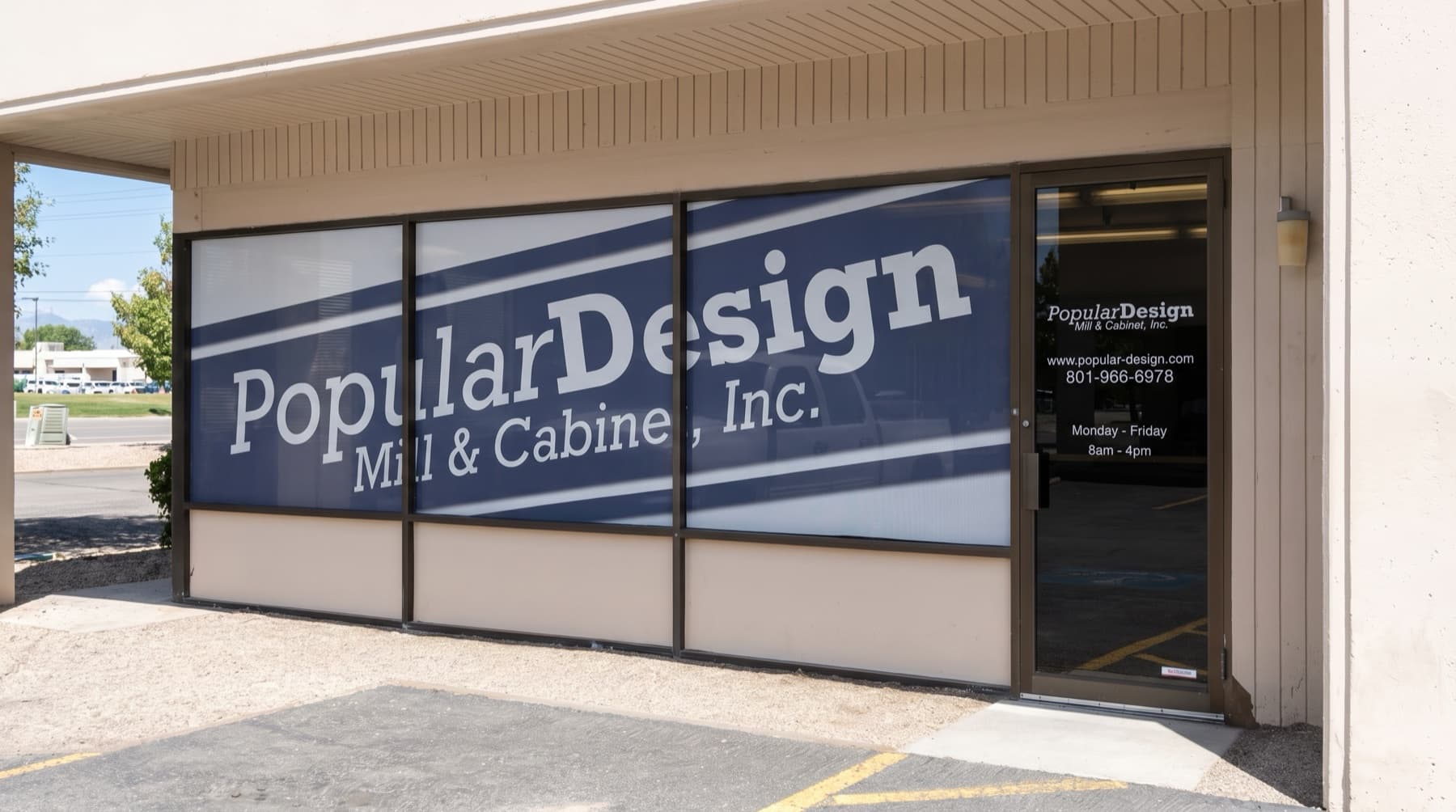
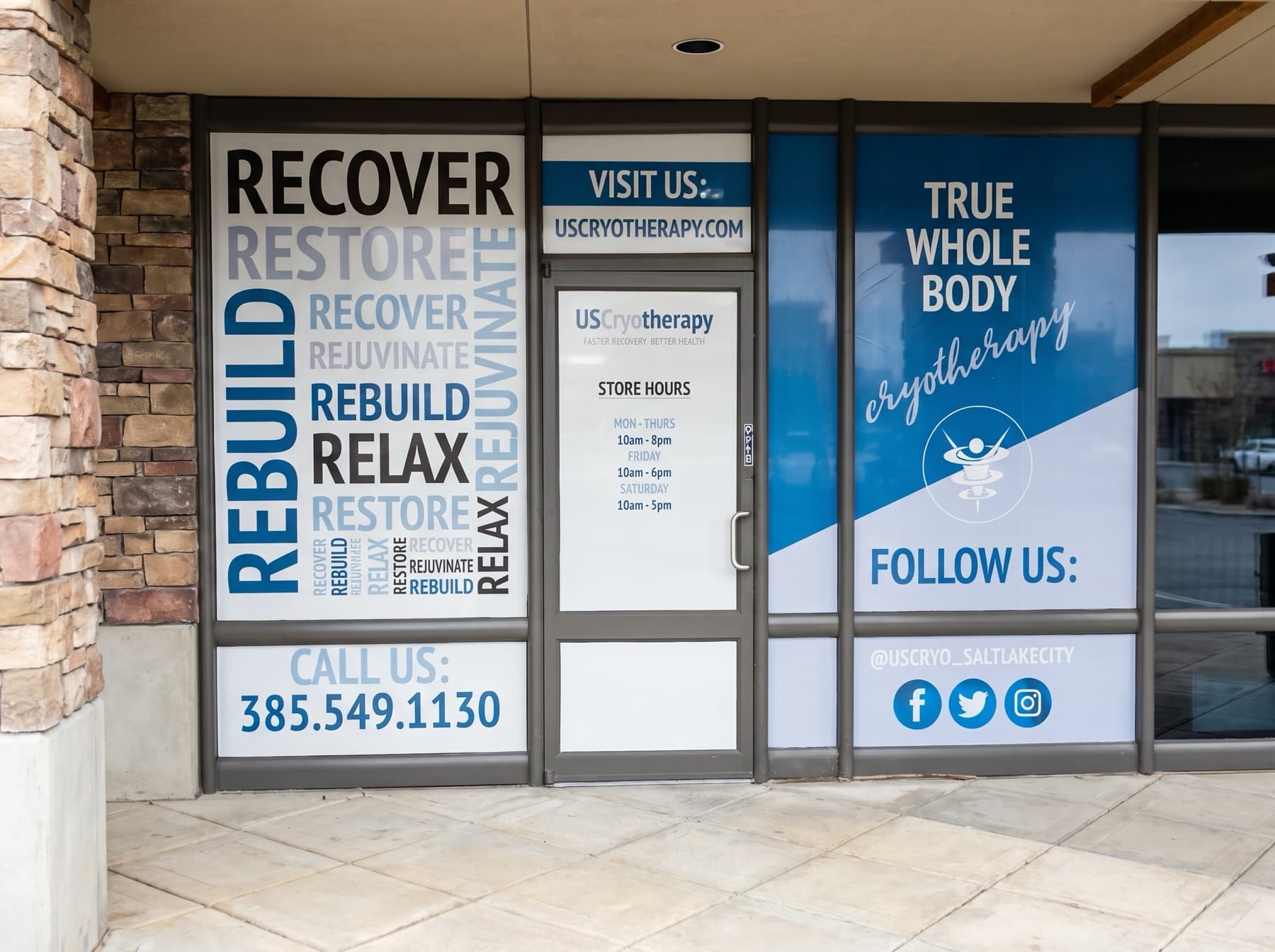
A logo, a phone number, a hours-of-operation block — cut from single-color vinyl and applied to clean glass. The cheap-and-clean version of storefront branding. Lasts years if installed correctly.
5. Lettering only
The most basic and most overlooked form. Hours, address, phone, business name. We DOT-cut it precisely, install in straight registration, and you've got professional storefront identity at the low end of the lettering range.
Coverage levels — how much of the glass is graphic
Window graphics aren't all-or-nothing. The four most common coverage decisions:
- Lettering / logo only: hours block, phone number, business name, single logo placement. Minimal glass coverage — the lowest-cost option.
- Bottom-third treatment: privacy frost on the bottom third with branding on top. Most common for retail and office storefronts.
- Half-coverage with see-through: perforated film covers ~50% of the glass with full graphics, leaves the rest clear for visibility.
- Full-coverage perforated: the entire window is a graphic, but see-through from inside. The "big storefront vibe" move.
- Full opaque: entire window solid graphic, no see-through.
For storefronts, the coverage decision is really about how much you want people walking by to see into your shop. High-end retail tends to keep visibility (perforated or partial). Service businesses with sensitive activity inside (medical, legal, financial) lean toward frosted or opaque.
Use cases — what we actually install most
Storefront branding
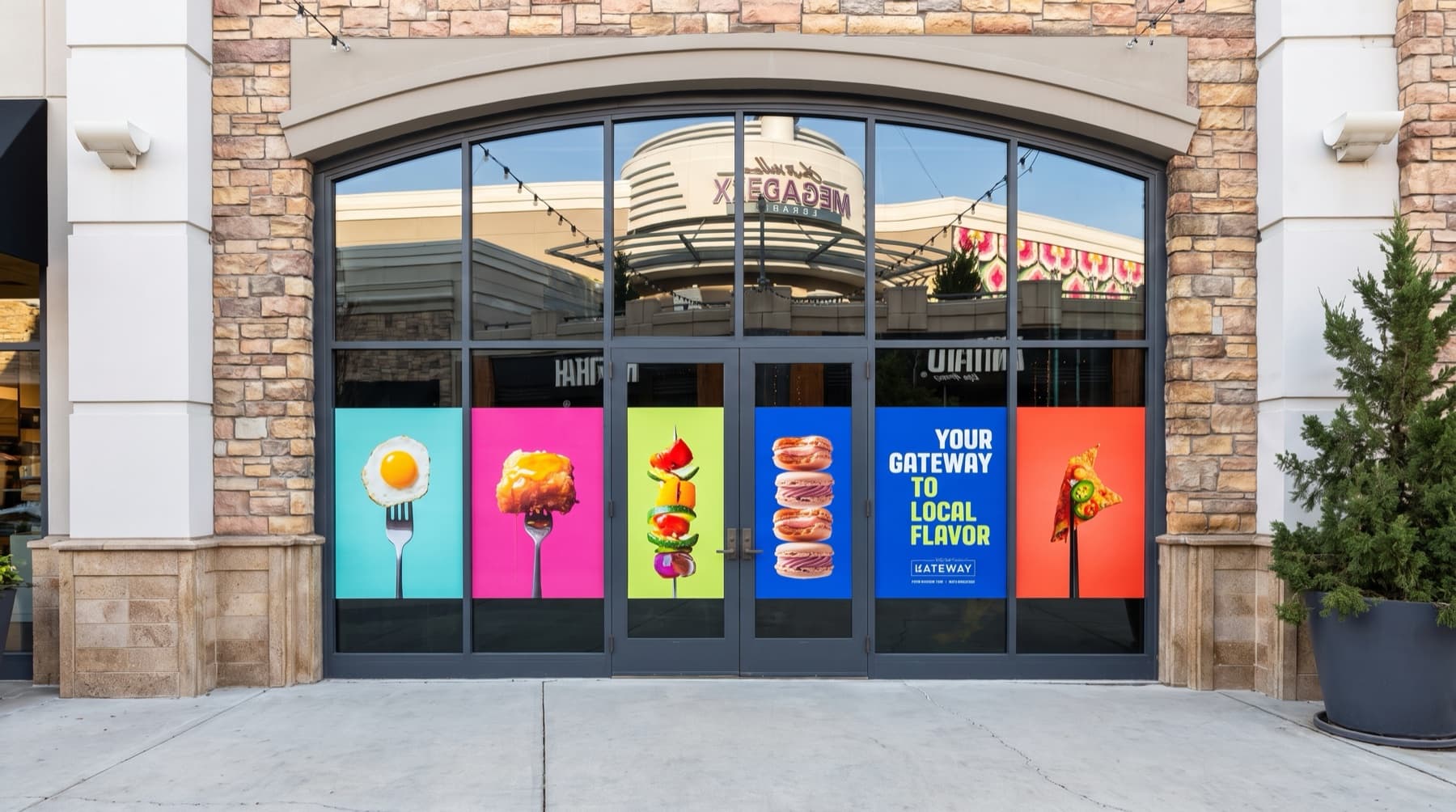
The whole reason window graphics exist. Hours, branding, sale signage, photos of the product, the address — every storefront has 30–80 square feet of free real estate facing the street. Most use ~10% of it. The shops that use 100% read as established. The ones that use 10% read as temporary.
Vehicle rear window perforated film
The single most-added wrap upgrade in our shop. A standard cargo van has 30–40 sq ft of rear and side glass. Wrapping the rest of the van and leaving the windows blank loses the back-of-vehicle impression — perforated film on the rear and side windows means the brand reads continuously, 360 degrees around the vehicle.
It's a modest add-on to a standard wrap. We bundle it on roughly 60% of our service-industry wrap jobs because the math is unbeatable.
Conference room glass + privacy
Open-floor offices with glass conference rooms have a privacy problem they don't always admit to. Frosted privacy vinyl — typically the bottom 60–70% of the glass, with a clear top strip and the logo cut from frosted on the strip — solves both the privacy problem and the brand-the-space problem in one install.
Retail signage that swaps with promotions
We do a lot of swap-cycle window vinyl for retail customers: holiday sales, new-product launches, grand-opening graphics. Custom-cut decals install in minutes and remove cleanly within a year. Cheap, fast, and replaceable.
Restaurant + bar windows
Hours block on the door, logo on the front window, menu highlights on the side glass, branded perforated film on the patio doors. Restaurant branding is incomplete without windows.
Materials we install
We use the same cast vinyl on windows that we use on vehicles for exterior applications, and interior-grade vinyl for indoor installs.
- Exterior storefront / vehicle perf: premium Avery Dennison cast vinyl and matched laminate (3M when a job calls for it). Cast film, UV-laminated, 5–7 year lifespan outdoor in Utah sun.
- Perforated film specifically: premium perforated window graphic film. We don't install cheap perforated film — it tears, fades, and tunnels at the dot perimeter inside 18 months.
- Frosted vinyl: premium etched-glass / frosted privacy film. Translucent, durable, removes cleanly.
- Interior privacy + decorative: standard calendered vinyl is fine for indoor non-UV applications; saves cost on decorative installs.
The film matters more on windows than on vehicle bodies because of the UV angle on glass — sun hits storefront glass for the entire workday. Cheap perforated film fails fastest of any vinyl product we've seen.
Pricing
Cost climbs with coverage — storefront hours-and-logo lettering and single custom-cut window logos are the entry point, conference-room frost and vehicle rear-window perf sit in the middle, and full perforated storefronts or whole retail fronts run highest. What moves the number: linear feet of glass, coverage type (perf is more expensive than decal), film grade, install complexity (street-level vs second-story), and design fee.
Design for window graphics uses the same package model as vehicle wraps. See full starting prices →
Window graphic vs window tint — the question we get every week
If you've made it this far you probably already know the answer, but here's the short version once more:
| Window graphics (us) | Window tint (not us) | |
|---|---|---|
| Purpose | Branding, signage, privacy with a design | Heat, glare, UV reduction |
| Film | Printable or cut vinyl with adhesive | Dyed, metalized, or ceramic tint film |
| Visible content | Logos, graphics, lettering, frosted patterns | Solid darkening, no design |
| Application | Storefronts, vehicles, office glass, retail | Vehicle side and rear windows, residential glass |
| Utah regulation | None — branding vinyl is unregulated | Yes — vehicle tint VLT % regulated by Utah law |
| Who installs | Us | A tint shop |
We don't install tint. If you're trying to darken the inside of a vehicle for heat reduction, that's a different specialty and a different film and a different conversation. We're happy to refer you. If you're trying to put your brand on the back of the van so it reads through the rear glass — that's perforated window graphics, and that's us.
The kinds of window jobs we install
- Fleet rear-window perf. Perforated rear-window film added on top of a service-fleet wrap, so the brand reads continuously across the back of every vehicle.
- Office and medical glass. Conference-room glass frosted with a custom-cut logo, plus lobby-door privacy treatment — a cleaner alternative to curtains.
- Storefront perforated film. Full storefront perforated film across street-facing windows, so the shop reads as established without losing the view from inside.
Frequently asked questions
Q. What's the difference between window graphics and window tint?
A. Window graphics put a design on the glass — branding, signage, privacy patterns. Window tint darkens the entire window for heat, glare, and UV reduction. Different films, different purposes, different shops install them. IGX does window graphics. We do not do window tint.
Q. Can people see in through perforated film?
A. No — from outside, perforated film reads as a solid graphic. From inside, you can see out as if through a screen. Roughly 50% of the film surface is perforation, 50% is printed vinyl. Light passes through enough to maintain interior visibility outward. Visibility inward is blocked.
Q. How long do window graphics last?
A. Indoor: 7–10 years. Exterior on glass: 5–7 years for cast vinyl + UV laminate. Perforated film specifically: 3–5 years in direct Utah sun — perforated film fails faster than solid film because UV degrades the dot perimeter.
Q. Will window graphics damage my glass?
A. No. Properly installed and removed within the film warranty window, vinyl removes cleanly from glass with no residue. We document glass condition at install. The one warning: vinyl on tempered glass that's already cracked can pull the crack wider during removal — we won't install on damaged glass for this reason.
Q. Can you install perforated film on car / truck side windows?
A. Yes — passenger and rear cargo van side windows are common. Driver's-side front window we won't install on (visibility regulation). Most fleet jobs do rear and side cargo glass and leave the front cab clean.
Q. Can you install on second-story or high storefront windows?
A. Yes, with a lift or scaffold added to the install plan. We'll quote the access cost separately so you can see what the height adds — most second-story storefronts add a lift day to the job.
Q. Can I do this myself with vinyl from Amazon?
A. You can try. We've removed enough failed DIY perf jobs to recommend you don't. The film matters, the install matters, and a single bubble across a 6-foot storefront window reads from across the street. Pay for the install, save the weekend.
Q. Do you do removable / temporary window graphics for events?
A. Yes — short-term vinyl for grand openings, sales, seasonal campaigns, pop-ups. Lower-grade film, lower price, designed to remove cleanly after 30–90 days. Quote on request.
Get a quote on your window graphic
- Send us a photo of the window. Use our contact form (or text (801) 648-9727) with the window photo, rough dimensions, and what you want on it. Same-day quote range.
- Try our AI design workflow if you've already mocked up the storefront in an AI tool.
- Call (801) 648-9727. Same-day callback if we miss the call.
Local service
Get a fast quote
Tell us about the job — we'll text you a real number.
Same-day reply during business hours with a starting price and a couple of quick questions. No sales funnel, no obligation — and you don’t have to use the designer.
Prefer to talk? Call (801) 648-9727